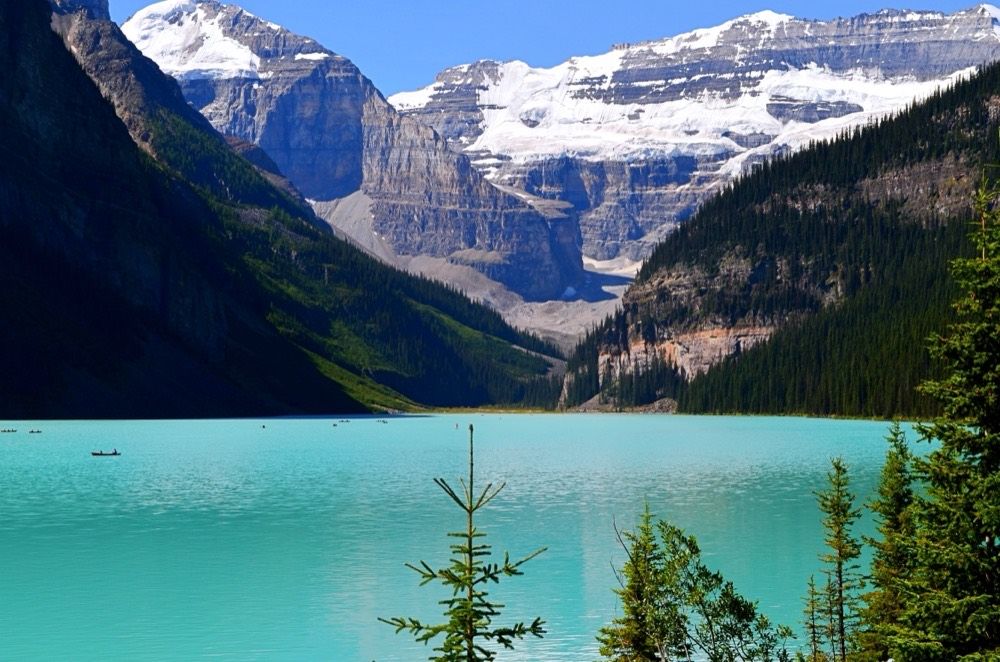
Larch Season in Banff: Where & When to See the Larches
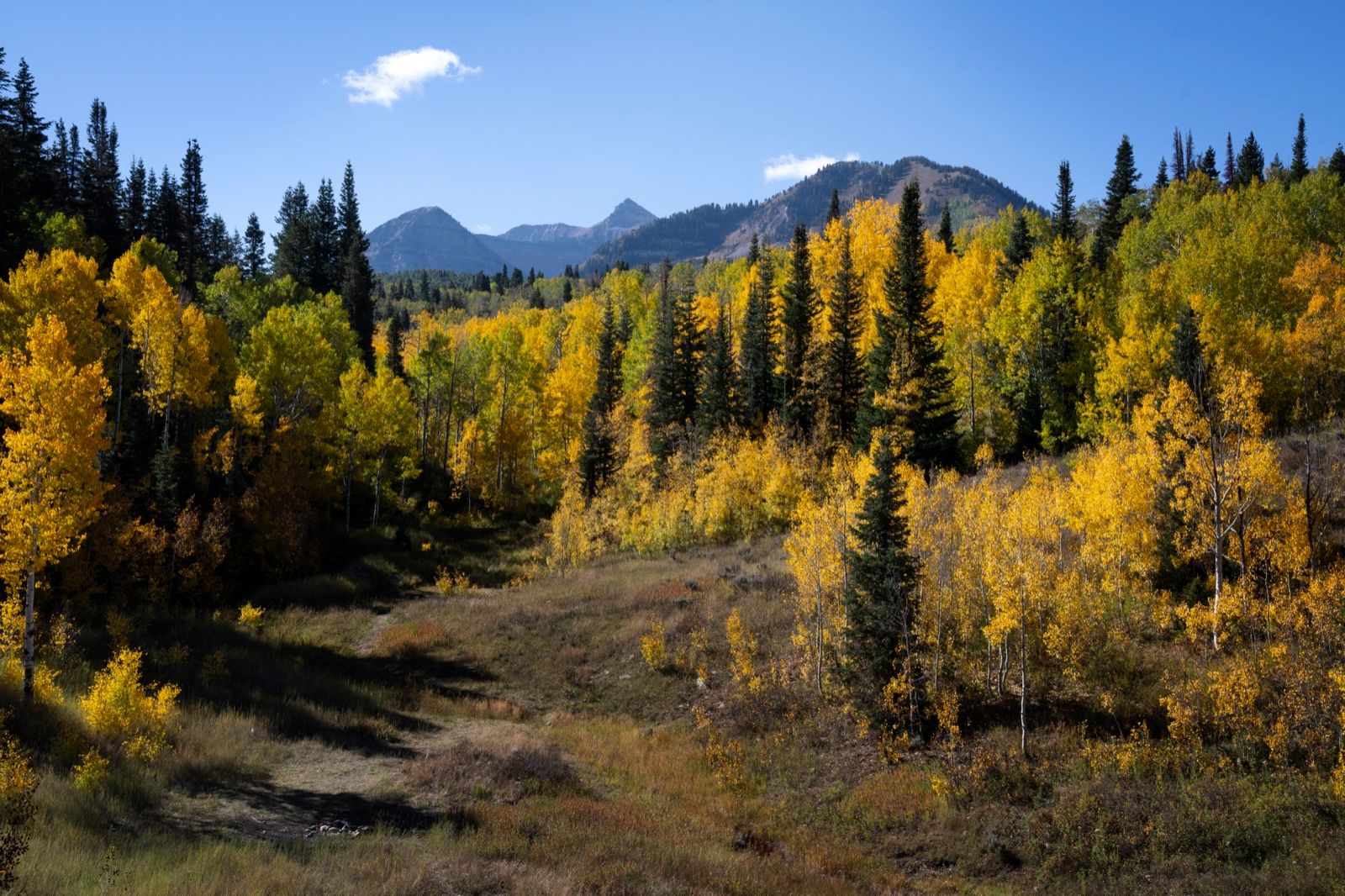
For about two weeks each fall, the high slopes around Banff and Lake Louise turn a colour most people don’t associate with evergreen country: brilliant, glowing gold. That’s larch season — a short, weather-dependent window when the alpine larches drop their summer green, blaze amber, and then shed their needles for winter. It’s become one of the most sought-after experiences in the Canadian Rockies, and also one of the trickiest to plan, because the best display sits at the top of a strenuous hike above a lake you can’t drive to. Here’s how it actually works.
When is larch season in Banff?
Larch season peaks from roughly the last week of September into the first week of October — call it September 20 to October 5 in a typical year. It’s short: the full gold usually lasts only one to two weeks, and a single early snowfall or wind storm can strip the needles in a day. Because the larches grow high (more on that below), the timing shifts with elevation and the year’s weather, so there’s no fixed date — the safest plan is to aim for the final weekend of September and hope the season cooperates.
Miss the window and the larches are bare; hit it and you get the single most photogenic fortnight in the Rockies.
What are larches, and why do they turn gold?
The star is the subalpine larch (Larix lyallii) — a conifer that behaves like a deciduous tree. Unlike the spruce and fir around it, the larch drops its needles every autumn, and just before it does, those needles turn from green to gold. Larches only grow at high subalpine elevations, roughly 1,800 to 2,400 metres, right at the treeline. That’s the key fact that shapes any larch trip: you have to climb to see them. They don’t grow down at lake level, so a drive-up viewpoint won’t do it — the gold is up where the trees give way to rock.
Where to see the larches in Banff
- Larch Valley & Sentinel Pass (from Moraine Lake) — the iconic one, and for good reason: an entire hanging valley of golden larches beneath the Valley of the Ten Peaks. It’s roughly 4–5 km up to the valley and about 12 km round trip if you continue to Sentinel Pass, with 500–700 m of climbing — a moderate-to-strenuous day. This is the trail everyone means when they say “larch hike.”
- Lake Louise: Saddleback Pass & the Plain of Six Glaciers — golden larches with the classic Lake Louise backdrop, and reachable without the Moraine Lake access problem below.
- Healy Pass (from Sunshine) — a longer, quieter day with sweeping larch meadows and fewer crowds.
- Arnica Lake and Taylor Lake — good alternatives when the marquee trails are busy.
Just outside the park, Kananaskis Country (Chester Lake, the Pocaterra/Highwood area) has excellent larch hiking too, if you have a car and want to escape the crowds.
The catch: getting to Larch Valley
Here’s what trips people up. The Larch Valley trailhead is at Moraine Lake — and since 2023, you cannot drive to Moraine Lake. During larch season specifically, demand for the Parks Canada shuttle is at its absolute peak, and the pre-dawn and morning slots are the first to vanish when reservations open. If Larch Valley is your goal, you need to sort out shuttle tickets weeks ahead, or reach the lake another way. Our full guide to getting to Moraine Lake lays out every option — read it before you build a day around the larches.
The fall bear rule you need to know
This one surprises almost everyone. During the fall, Parks Canada regularly requires a minimum group size of four on the Larch Valley, Sentinel Pass and Paradise Valley trails, because grizzly bears are feeding heavily in the area before winter. When the restriction is in force, solo hikers and pairs are turned back at the trailhead — no exceptions. It comes and goes with bear activity, so check the current advisory on the Parks Canada site before you go. It’s a real safety measure, not red tape: this is prime grizzly habitat in the season bears are most active.
How to see the larches without the hassle
If the strenuous hike and the shuttle lottery aren’t your idea of a holiday, there’s a simpler version. Our tours reach Moraine Lake and Lake Louise with access handled all the way to mid-October, so you can stand at the two most beautiful viewpoints in the Rockies while the surrounding slopes are dotted gold — no shuttle reservation, no parking, no 5 a.m. alarm. You’ll see the season at its best from the lakeshores, even if the full immersive valley is a separate hike:
- Lake Louise & Moraine Lake Half-Day — $119 — both lakes in five hours from Canmore & Banff, with Moraine access sorted.
- Banff in a Day: Lakes & Johnston Canyon — $149 — the full day from Calgary, our most-booked tour.
Want a guided hiking day in the same season? Our Canmore Day Hike: Grassi Lakes & Grotto Canyon — $199 is an easier, guided alternative to the backcountry larch trails — a great option if you’d rather walk with a guide than tackle Sentinel Pass on your own. For where the larches fit into a longer trip, see our Banff itinerary guide, and for the rest of the year, the month-by-month guide.
Tips for a larch-season day
- Go early and midweek. Larch-season weekends are the busiest days of the entire Rockies year; a Tuesday and a dawn start make a real difference.
- Dress for winter, hope for fall. Late September at 2,300 m can deliver sun, wind, rain or snow in the same afternoon — layers and real footwear, always.
- Don’t gamble the whole trip on it. The window is short and unpredictable. Build a plan that’s still worth it if the larches turn early or a storm strips them — the lakes and the Icefields Parkway don’t disappoint in any week.
- Book access first. Shuttle or tour before anything else; it’s the constraint everything else depends on.
FAQ
When is the best time to see larches in Banff?
The last week of September through the first week of October, in a typical year. The peak lasts only one to two weeks and shifts with elevation and weather, so aim for late September and watch conditions.
Where is Larch Valley?
Above Moraine Lake — the trailhead is at the Moraine Lake shoreline, climbing about 4–5 km up to the valley and continuing to Sentinel Pass.
Can you drive to Moraine Lake for larch season?
No. Private vehicles have been banned since 2023, and larch season is the hardest time of year to get a Parks Canada shuttle seat. Book weeks ahead, or take a guided tour that includes access.
Do you need a group of four to hike Larch Valley?
Often, yes. Parks Canada regularly imposes a minimum group size of four on the Larch Valley and Sentinel Pass trails in fall because of grizzly activity, and turns back solo hikers and pairs. Check the current advisory before you go.
How hard is the Larch Valley hike?
Moderate to strenuous — roughly 500–700 m of climbing over a 12 km round trip to Sentinel Pass. Good fitness and proper footwear required; it’s a real mountain hike, not a stroll.
Can a tour take me to see the larches?
Our tours bring you to Moraine Lake and Lake Louise with access handled through mid-October, so you can see the golden slopes from the classic viewpoints without the shuttle lottery. The full Larch Valley hike itself is a separate self-guided outing subject to the fall bear rule.
Catch the gold at its best — we’ll handle Moraine Lake access, park fees and timing. Departures from Calgary, Canmore and Banff. Browse All Tours